Three boards a customer can play before ordering one.
1-LK is a workshop in Moratuwa that has turned halmilla, jak and lac since 2009. It makes three Sri Lankan boards, tournament carrom, pancha keliya and the olinda poruwa, in ten finishes. Most of its customers are abroad and can't visit, so the site had to do what a showroom does.
The brief
People who grew up with these games know exactly how the boards look and how the pieces move, and a board that's slightly wrong would tell them the workshop doesn't know its craft. Buyers overseas needed to see the finishes, choose a board and order it, and the workshop needed those orders and questions to land somewhere it could manage them.
What made it hard
- Pancha keliya is barely documented online, and what exists is often wrong.
- Three games with different rules and physics, on one shared 3D table, in a browser on a phone.
- Ten finishes, five of them carved, to show without a photo shoot for every combination.
What we built for them
A showroom you can play in
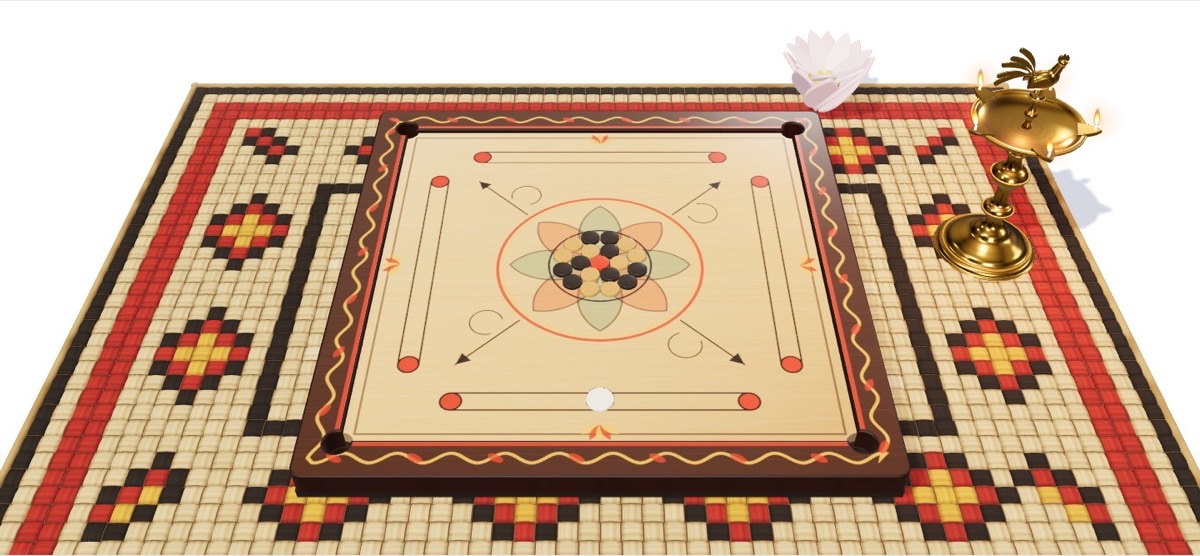
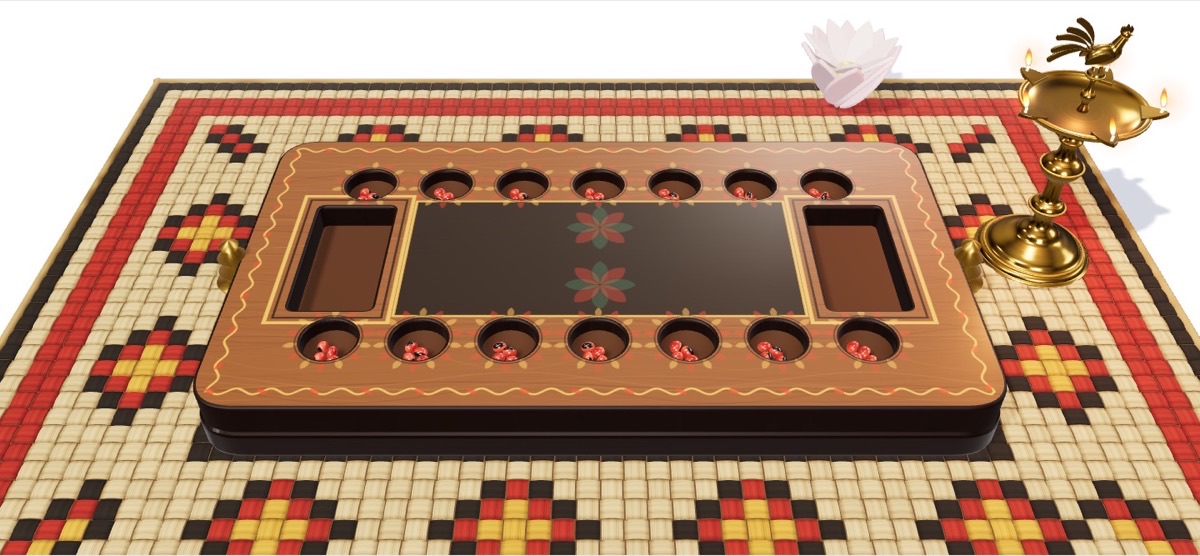
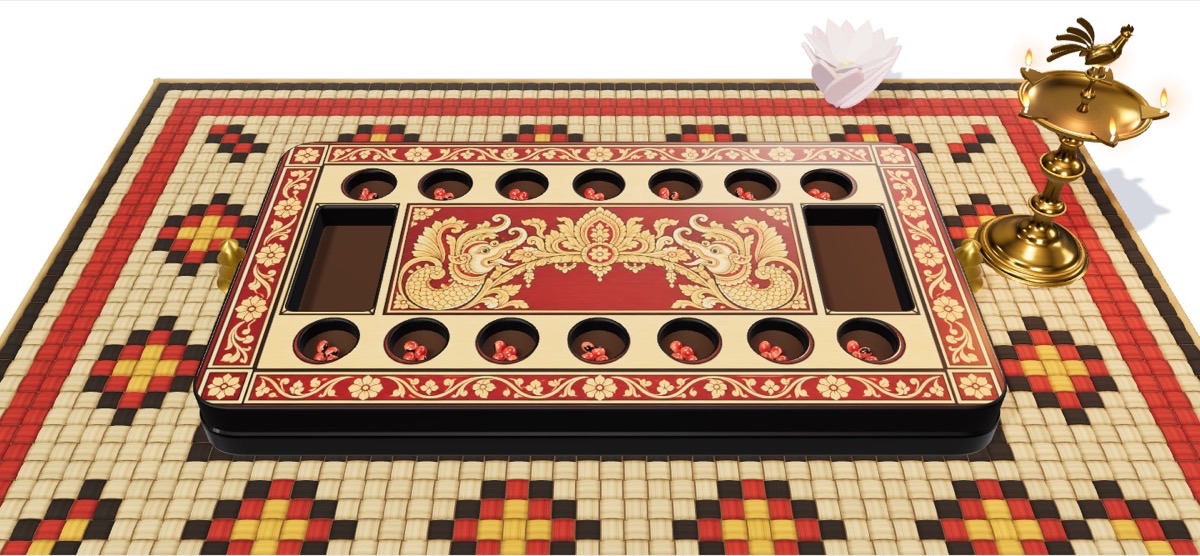
All three boards are playable in 3D on the home page. Carrom is built from the tournament measurements, a 74 cm playing surface, 4.45 cm corner pockets, a 17 cm center circle, and the striker runs on a physics model with friction, cushion rebound and a pocket test, so a flick behaves the way it does on a real board. Pancha keliya throws its shells and locks its pieces by the real rules; olinda sows and captures the way it's played on the island.
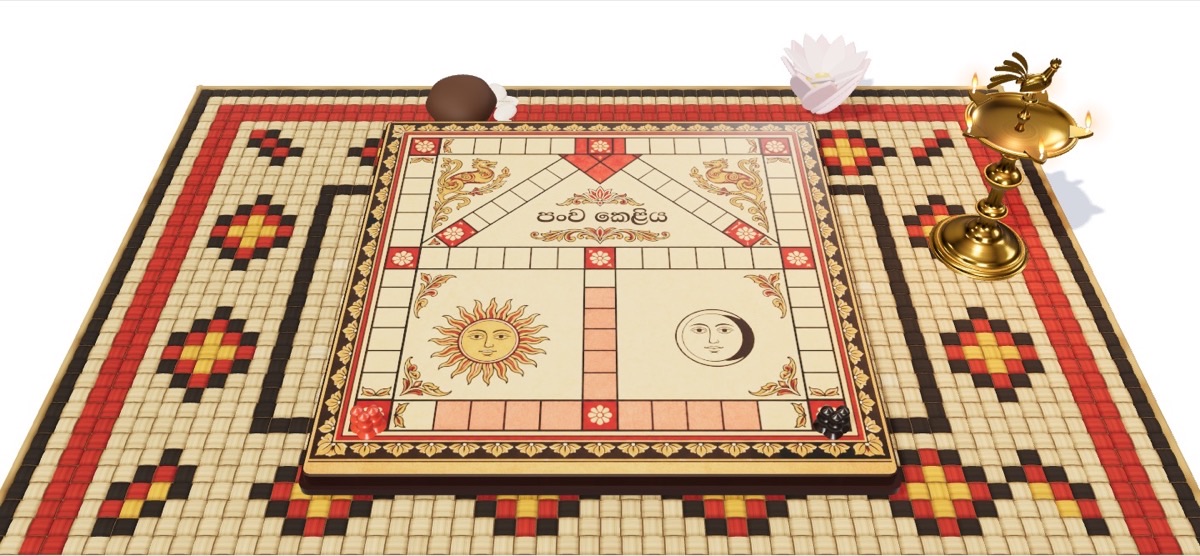
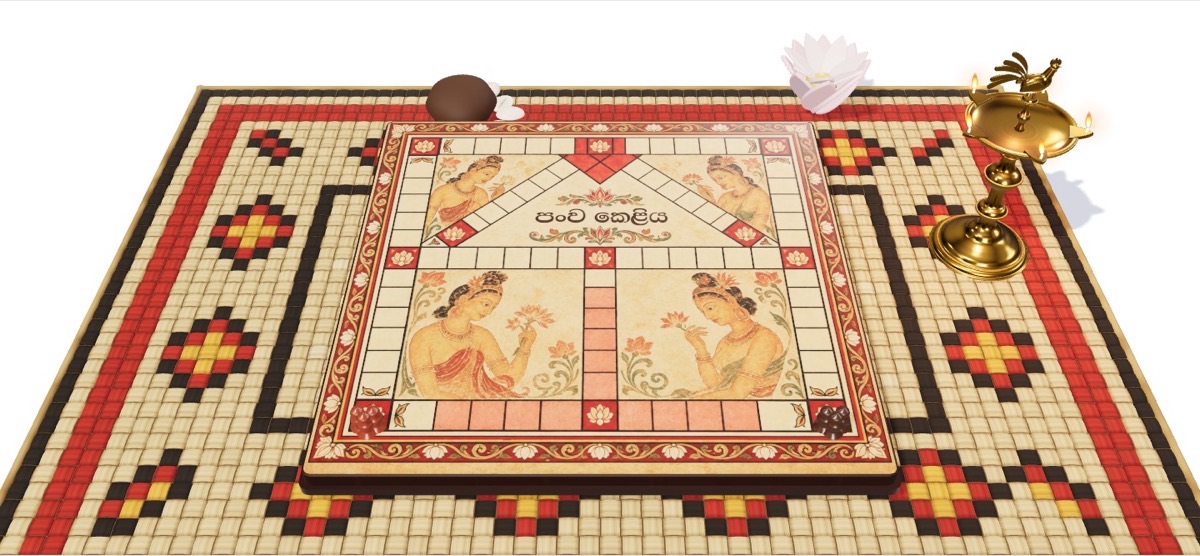
Pancha keliya, to the real board
Pancha keliya is barely documented online, and much of what exists is wrong, so we went to the sources: photographs of a real board, its pieces and its rules sheet, the workshop's own painted board artwork, which the 3D geometry is measured from, and the published record, including the Ludii games database citing Murray (1951) and Marin (1942). The board is square, thirteen cells a side: a circuit round the outside, a row across the middle, a column from the bottom edge, and two diagonals meeting at an apex. Shells thrown onto a coconut husk decide each move, and a piece stays locked on its corner until a one or a five releases it. A customer who knows the game sees the board they grew up with.
Ten finishes without a photo shoot
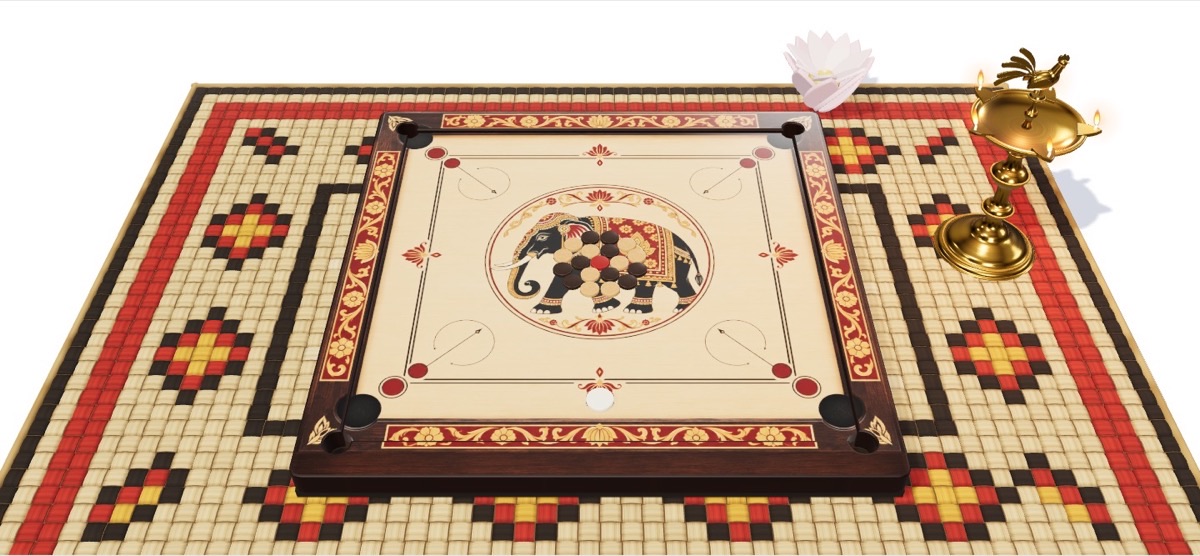
Every finish is drawn in code, from the Kandyan lacquer to the carved elephant, apsara and makara designs, and painted onto the 3D board as a visitor switches between them. Thirty combinations of board and finish, no photography, and a new finish is an afternoon's work rather than a studio day.
A configurator, and a console for the workshop
The shop drives the same 3D table: a customer picks a board, a finish and what goes in the box, and sees exactly what the workshop will make. Behind it we built the workshop's own software: enquiries and orders land in a private store, and a sign-in console lets the workshop read them, mark each one open or done, and publish changes to the catalogue and prices without touching code.
Found for the searches buyers type
The site carries structured data for the workshop as a store, for each game, for how each is played and for the questions people ask, so someone searching for a carrom board from Sri Lanka, or asking an AI assistant how pancha keliya is played, finds 1-LK. Text pages never download the 3D engine, so the pages people land on from search stay light.
The board, to its real measurements
The plan the 3D board is measured from: thirteen cells a side, a circuit round the outside, a row across the middle, a column from the bottom edge, and two diagonals meeting at an apex. Crossed squares are the safe squares where a piece can't be taken.
Rendered from the live table
Every still is captured from the playable 3D table on 1-lk.com, with the controls hidden.
Want your business built this carefully?
Tell us what you'd like the site to do. A person replies within one business day.
Get a quote